From Electromagnetic to Meta-Toxic: A Post-Natural Fieldwork
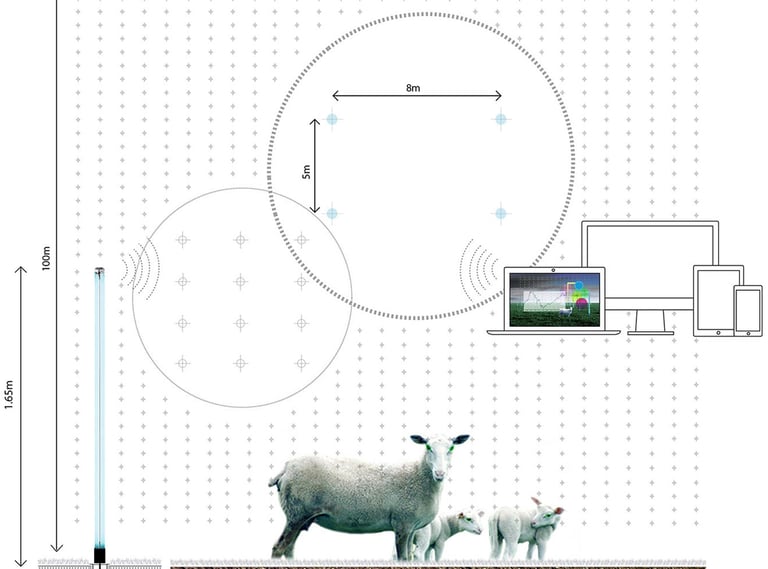
Toxic Field is an 'in situ' proposal based on the detection of soil pollution. It borrows its formal aspect from the project 'Lightning Field' of Walter de Maria from 1977. At the time, the artist created a rectangular field in nature filled with 400 steel poles, generating an electromagnetic field. The Toxic Field proposal replaces the 400 steel poles with phosphorescent sticks. The use of artificial light is a contrast between the synthetic world created by various pollutants and the endangered natural environment. The Toxic Field is almost invisible during the day, but at night, it disrupts the natural landscape's vision. The data are collected by a combination of sensors and transmitted to the website, including installation characteristics. The display of various contaminants (dioxins, phenols, hydrocarbons, nitrates, phosphorus, and pesticides) operates like a pollution market based on the spot-rate values of soil toxicity. Thus, the meta-toxic field reflects the reality that is invisible yet present in our surroundings. Through the variation between the physical world and the virtual world, the project engages the power of denunciation. The objective of the proposal is to raise awareness of soil pollution that damages soils and prevents them from recovering their original qualities. This proposal, adaptable to any land affected, can also be seen as a metaphorical reflection of self-contamination.
The project was presented as part of the Coal Art & Environment Contest.
toxic field